
Insights
Fitness Age Test: 5 Simple Checks for Strength, Balance and Longevity
Fitness Age Test: 5 Simple Checks for Strength, Balance and Longevity
Your birth age tells you how long you have lived. Your fitness age asks a more useful question: how capable is your body today? These five simple checks reveal where your strength, balance, endurance and mobility need attention—and give you a baseline you can improve.
Your birth age tells you how long you have lived. Your fitness age asks a more useful question: how capable is your body today? These five simple checks reveal where your strength, balance, endurance and mobility need attention—and give you a baseline you can improve.
What is a fitness age test?
A fitness age test compares what your body can do today with the qualities that support long-term independence: strength, balance, grip, cardiovascular endurance and mobility. It is not a medical diagnosis and it cannot predict how long you will live. It is simply a practical snapshot.
That snapshot becomes valuable when you repeat it. Instead of judging progress only by body weight or appearance, you can see whether everyday capability is improving.
Five simple fitness age checks
Chair rise: Stand from a stable chair without using your hands, then sit with control. Count comfortable repetitions over 30 seconds. This checks lower-body strength and control.
Single-leg balance: Stand beside a solid support and time how long you can balance safely on each leg. Stop if you feel unsteady.
Grip and carry: Carry two manageable weights with tall posture for a short distance. Grip strength matters, but so do trunk control and walking stability.
Walking endurance: Record the distance you can walk briskly and comfortably in six minutes on a safe, level route. Keep the conditions consistent when you retest.
Everyday mobility: Notice whether you can reach overhead, rotate comfortably and move into a controlled squat or chair sit without pain.
Do not force any test. If you have a health condition, pain, dizziness or concerns about exercise, speak to an appropriate health professional first.
How should you interpret the results?
Your first result is a baseline, not a pass or fail. Online age charts can be interesting, but your most useful comparison is with your own previous performance under similar conditions.
Look for the weakest link. Strong legs with poor balance, good cardio with limited mobility, or a large difference between sides can all point towards what deserves more attention. Record the result, the test conditions and how the effort felt.
The aim is not to become younger on paper. It is to make your body more capable, resilient and useful in real life.
How to improve your fitness age
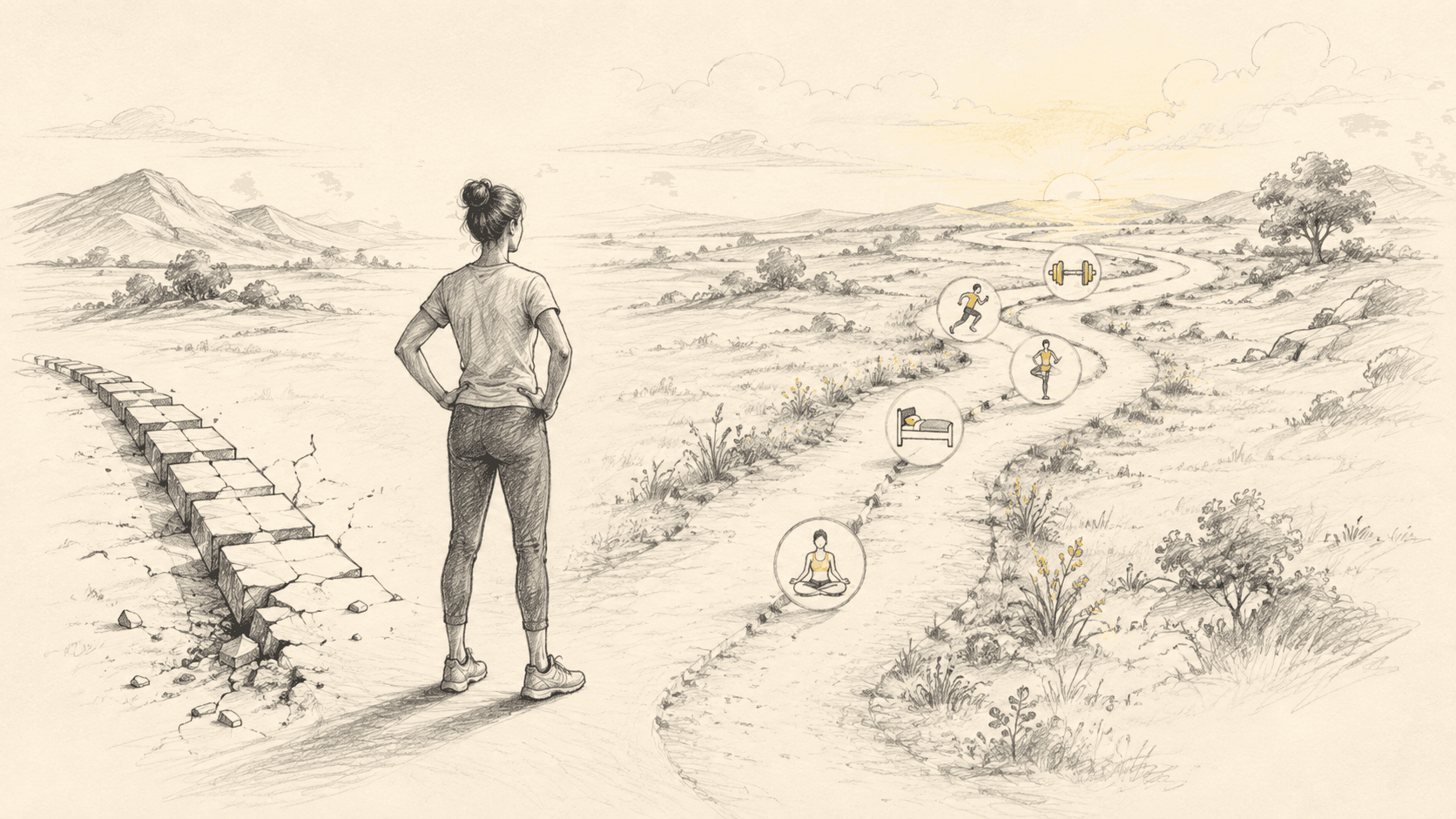
Build a balanced week rather than training only your favourite quality. Combine two full-body strength sessions, regular moderate cardiovascular work, brief balance practice and mobility that supports the movements you want to keep.
For a broader framework, read our Fitness for Longevity training guide. You can also use your VITRO Vitality Score to turn several physical abilities into one repeatable benchmark.
How often should you retest?
Retest every eight to twelve weeks using the same setup. That is usually enough time for training to produce a meaningful change without turning every workout into an examination.
Want a clear baseline across multiple fitness qualities? Find an upcoming VITRO Vitality Games event and discover where you are strong, what needs work and what to train next.
Published by VITRO Vitality Games. Educational fitness information only — not medical advice, diagnosis or treatment. If you have a health condition or concern, seek advice from a qualified healthcare professional.
Latest Blogs


Insights
Fitness Age Test: 5 Simple Checks for Strength, Balance and Longevity
Fitness Age Test: 5 Simple Checks for Strength, Balance and Longevity
Your birth age tells you how long you have lived. Your fitness age asks a more useful question: how capable is your body today? These five simple checks reveal where your strength, balance, endurance and mobility need attention—and give you a baseline you can improve.
Your birth age tells you how long you have lived. Your fitness age asks a more useful question: how capable is your body today? These five simple checks reveal where your strength, balance, endurance and mobility need attention—and give you a baseline you can improve.
What is a fitness age test?
A fitness age test compares what your body can do today with the qualities that support long-term independence: strength, balance, grip, cardiovascular endurance and mobility. It is not a medical diagnosis and it cannot predict how long you will live. It is simply a practical snapshot.
That snapshot becomes valuable when you repeat it. Instead of judging progress only by body weight or appearance, you can see whether everyday capability is improving.
Five simple fitness age checks
Chair rise: Stand from a stable chair without using your hands, then sit with control. Count comfortable repetitions over 30 seconds. This checks lower-body strength and control.
Single-leg balance: Stand beside a solid support and time how long you can balance safely on each leg. Stop if you feel unsteady.
Grip and carry: Carry two manageable weights with tall posture for a short distance. Grip strength matters, but so do trunk control and walking stability.
Walking endurance: Record the distance you can walk briskly and comfortably in six minutes on a safe, level route. Keep the conditions consistent when you retest.
Everyday mobility: Notice whether you can reach overhead, rotate comfortably and move into a controlled squat or chair sit without pain.
Do not force any test. If you have a health condition, pain, dizziness or concerns about exercise, speak to an appropriate health professional first.
How should you interpret the results?
Your first result is a baseline, not a pass or fail. Online age charts can be interesting, but your most useful comparison is with your own previous performance under similar conditions.
Look for the weakest link. Strong legs with poor balance, good cardio with limited mobility, or a large difference between sides can all point towards what deserves more attention. Record the result, the test conditions and how the effort felt.
The aim is not to become younger on paper. It is to make your body more capable, resilient and useful in real life.
How to improve your fitness age
Build a balanced week rather than training only your favourite quality. Combine two full-body strength sessions, regular moderate cardiovascular work, brief balance practice and mobility that supports the movements you want to keep.
For a broader framework, read our Fitness for Longevity training guide. You can also use your VITRO Vitality Score to turn several physical abilities into one repeatable benchmark.
How often should you retest?
Retest every eight to twelve weeks using the same setup. That is usually enough time for training to produce a meaningful change without turning every workout into an examination.
Want a clear baseline across multiple fitness qualities? Find an upcoming VITRO Vitality Games event and discover where you are strong, what needs work and what to train next.
Published by VITRO Vitality Games. Educational fitness information only — not medical advice, diagnosis or treatment. If you have a health condition or concern, seek advice from a qualified healthcare professional.
Latest Blogs
Insights
Fitness Age Test: 5 Simple Checks for Strength, Balance and Longevity
Fitness Age Test: 5 Simple Checks for Strength, Balance and Longevity
Your birth age tells you how long you have lived. Your fitness age asks a more useful question: how capable is your body today? These five simple checks reveal where your strength, balance, endurance and mobility need attention—and give you a baseline you can improve.
Your birth age tells you how long you have lived. Your fitness age asks a more useful question: how capable is your body today? These five simple checks reveal where your strength, balance, endurance and mobility need attention—and give you a baseline you can improve.
What is a fitness age test?
A fitness age test compares what your body can do today with the qualities that support long-term independence: strength, balance, grip, cardiovascular endurance and mobility. It is not a medical diagnosis and it cannot predict how long you will live. It is simply a practical snapshot.
That snapshot becomes valuable when you repeat it. Instead of judging progress only by body weight or appearance, you can see whether everyday capability is improving.
Five simple fitness age checks
Chair rise: Stand from a stable chair without using your hands, then sit with control. Count comfortable repetitions over 30 seconds. This checks lower-body strength and control.
Single-leg balance: Stand beside a solid support and time how long you can balance safely on each leg. Stop if you feel unsteady.
Grip and carry: Carry two manageable weights with tall posture for a short distance. Grip strength matters, but so do trunk control and walking stability.
Walking endurance: Record the distance you can walk briskly and comfortably in six minutes on a safe, level route. Keep the conditions consistent when you retest.
Everyday mobility: Notice whether you can reach overhead, rotate comfortably and move into a controlled squat or chair sit without pain.
Do not force any test. If you have a health condition, pain, dizziness or concerns about exercise, speak to an appropriate health professional first.
How should you interpret the results?
Your first result is a baseline, not a pass or fail. Online age charts can be interesting, but your most useful comparison is with your own previous performance under similar conditions.
Look for the weakest link. Strong legs with poor balance, good cardio with limited mobility, or a large difference between sides can all point towards what deserves more attention. Record the result, the test conditions and how the effort felt.
The aim is not to become younger on paper. It is to make your body more capable, resilient and useful in real life.
How to improve your fitness age
Build a balanced week rather than training only your favourite quality. Combine two full-body strength sessions, regular moderate cardiovascular work, brief balance practice and mobility that supports the movements you want to keep.
For a broader framework, read our Fitness for Longevity training guide. You can also use your VITRO Vitality Score to turn several physical abilities into one repeatable benchmark.
How often should you retest?
Retest every eight to twelve weeks using the same setup. That is usually enough time for training to produce a meaningful change without turning every workout into an examination.
Want a clear baseline across multiple fitness qualities? Find an upcoming VITRO Vitality Games event and discover where you are strong, what needs work and what to train next.
Published by VITRO Vitality Games. Educational fitness information only — not medical advice, diagnosis or treatment. If you have a health condition or concern, seek advice from a qualified healthcare professional.