Insights
Why Fitness Plans Fail: Build a Sustainable Training System
Why Fitness Plans Fail: Build a Sustainable Training System
If your training plan only works when life is calm and motivation is high, the problem may not be your discipline. It may be the system.
If your training plan only works when life is calm and motivation is high, the problem may not be your discipline. It may be the system.
Why fitness plans fail when life gets busy
Many fitness programmes are built around a perfect short-term block: fixed sessions, uninterrupted weeks and consistently high motivation. That can feel effective at first, but the structure often falls apart when work becomes demanding, sleep is disrupted or family responsibilities change. A plan that only works in ideal conditions is difficult to sustain.
Motivation is not a training system
When a programme stops working, it is easy to blame yourself. You may assume that you lack motivation, discipline or capability. But motivation naturally changes from week to week. A useful fitness system does not require you to feel inspired every day; it gives you a realistic action to take even when time and energy are limited.
What makes a sustainable fitness plan?
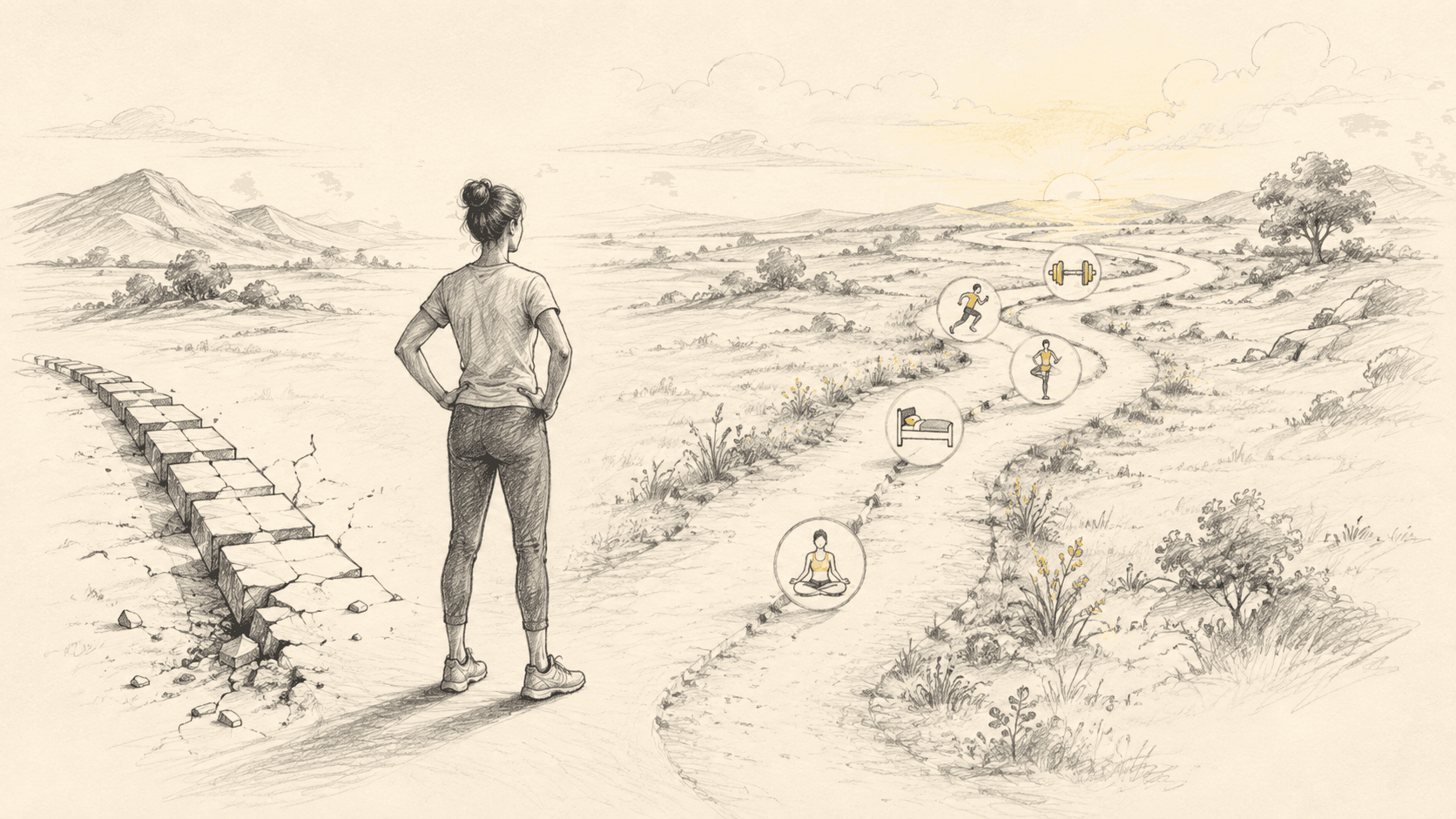
A sustainable fitness plan should fit your ordinary life, not just your best week. Set a realistic minimum you can maintain, keep shorter alternatives for busy days, progress gradually and include enough recovery to repeat the work. Measure trends over time instead of treating one missed session as failure. Consistency comes from a system that can bend without breaking.
Build a plan you can return to
Missing a workout is feedback, not proof that you have failed. Adjust the session, return to your baseline and continue. VITRO uses a test–train–retest approach so progress is measured across cardiovascular fitness, strength and control rather than judged by motivation alone. The best training plan is not the most intense one—it is the one that keeps helping you move forward when real life happens.
Published by VITRO Vitality Games. Educational fitness information only — not medical advice, diagnosis or treatment. If you have a health condition or concern, seek advice from a qualified healthcare professional.
Latest Blogs


Insights
Why Fitness Plans Fail: Build a Sustainable Training System
Why Fitness Plans Fail: Build a Sustainable Training System
If your training plan only works when life is calm and motivation is high, the problem may not be your discipline. It may be the system.
If your training plan only works when life is calm and motivation is high, the problem may not be your discipline. It may be the system.
Why fitness plans fail when life gets busy
Many fitness programmes are built around a perfect short-term block: fixed sessions, uninterrupted weeks and consistently high motivation. That can feel effective at first, but the structure often falls apart when work becomes demanding, sleep is disrupted or family responsibilities change. A plan that only works in ideal conditions is difficult to sustain.
Motivation is not a training system
When a programme stops working, it is easy to blame yourself. You may assume that you lack motivation, discipline or capability. But motivation naturally changes from week to week. A useful fitness system does not require you to feel inspired every day; it gives you a realistic action to take even when time and energy are limited.
What makes a sustainable fitness plan?
A sustainable fitness plan should fit your ordinary life, not just your best week. Set a realistic minimum you can maintain, keep shorter alternatives for busy days, progress gradually and include enough recovery to repeat the work. Measure trends over time instead of treating one missed session as failure. Consistency comes from a system that can bend without breaking.
Build a plan you can return to
Missing a workout is feedback, not proof that you have failed. Adjust the session, return to your baseline and continue. VITRO uses a test–train–retest approach so progress is measured across cardiovascular fitness, strength and control rather than judged by motivation alone. The best training plan is not the most intense one—it is the one that keeps helping you move forward when real life happens.
Published by VITRO Vitality Games. Educational fitness information only — not medical advice, diagnosis or treatment. If you have a health condition or concern, seek advice from a qualified healthcare professional.
Latest Blogs
Insights
Why Fitness Plans Fail: Build a Sustainable Training System
Why Fitness Plans Fail: Build a Sustainable Training System
If your training plan only works when life is calm and motivation is high, the problem may not be your discipline. It may be the system.
If your training plan only works when life is calm and motivation is high, the problem may not be your discipline. It may be the system.
Why fitness plans fail when life gets busy
Many fitness programmes are built around a perfect short-term block: fixed sessions, uninterrupted weeks and consistently high motivation. That can feel effective at first, but the structure often falls apart when work becomes demanding, sleep is disrupted or family responsibilities change. A plan that only works in ideal conditions is difficult to sustain.
Motivation is not a training system
When a programme stops working, it is easy to blame yourself. You may assume that you lack motivation, discipline or capability. But motivation naturally changes from week to week. A useful fitness system does not require you to feel inspired every day; it gives you a realistic action to take even when time and energy are limited.
What makes a sustainable fitness plan?
A sustainable fitness plan should fit your ordinary life, not just your best week. Set a realistic minimum you can maintain, keep shorter alternatives for busy days, progress gradually and include enough recovery to repeat the work. Measure trends over time instead of treating one missed session as failure. Consistency comes from a system that can bend without breaking.
Build a plan you can return to
Missing a workout is feedback, not proof that you have failed. Adjust the session, return to your baseline and continue. VITRO uses a test–train–retest approach so progress is measured across cardiovascular fitness, strength and control rather than judged by motivation alone. The best training plan is not the most intense one—it is the one that keeps helping you move forward when real life happens.
Published by VITRO Vitality Games. Educational fitness information only — not medical advice, diagnosis or treatment. If you have a health condition or concern, seek advice from a qualified healthcare professional.